Stand on a beach and the ocean can seem like a flat, endless sheet of water. But beneath that familiar surface lies the largest living space on Earth—a world of underwater mountains, glowing animals, crushing pressure and ecosystems that survive without sunlight.
The ocean also influences the air we breathe, the weather we experience and the temperature of the entire planet.
These ten carefully sourced facts reveal just how extraordinary the ocean really is—without relying on the exaggerated claims frequently repeated online.
Fact-checking note: The numerical claims in this guide were checked against the linked scientific and government sources on August 28, 2026. Mapping totals and other measurements may change as new observations become available.
Key numbers at a glance
- 71%: the approximate share of Earth’s surface covered by the global ocean.
- 96.5%: the approximate share of Earth’s water held by oceans.
- About half: the ocean’s estimated contribution to global oxygen production.
- About 90%: the share of excess planetary heat absorbed by the ocean.
- 28.7%: the seafloor mapped to modern standards as reported by Seabed 2030 in April 2026.
1. Earth has one connected ocean
We normally speak about five oceans: the Pacific, Atlantic, Indian, Southern and Arctic. These names help us describe different geographical regions, but they are not completely separate bodies of water.
All five are connected. Water, heat, nutrients and marine organisms move between them through currents and circulation systems. For this reason, scientists often describe them collectively as the global ocean.
This connected ocean covers approximately 71% of Earth’s surface. That means our planet has far more ocean than dry land. The Pacific Ocean alone is larger than all of Earth’s continents combined.
A change in one region can also influence places thousands of kilometres away. Ocean currents transport heat around the planet, connect marine ecosystems and help shape regional weather.
NOAA explains that there is one global ocean divided into five named basins.
2. Approximately 96.5% of Earth’s water is in the ocean
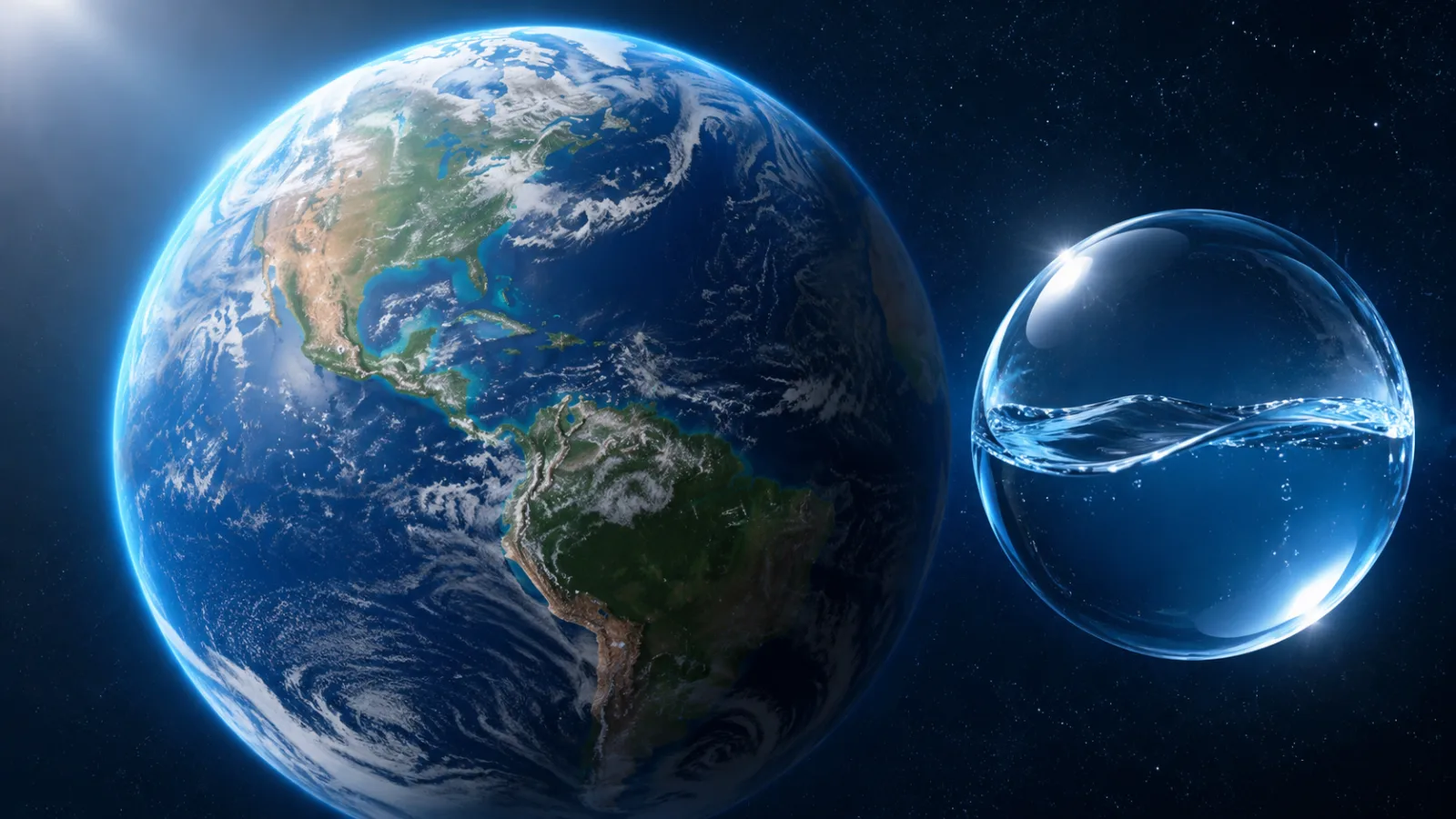
Earth looks rich in water—and it is. But most of that water cannot be used directly for drinking or agriculture because it is salty.
According to the United States Geological Survey, the oceans contain approximately 96.5% of all the water on, in and above Earth.
Only a small percentage is freshwater. Most of that freshwater is locked inside glaciers and ice caps or stored underground. Rivers and lakes, which provide much of the water people use every day, contain only a tiny portion of the planet’s total water supply.
This is why a planet covered in water can still experience serious freshwater shortages. Protecting rivers, wetlands, watersheds and underground aquifers is essential even though they may appear enormous from a human perspective.
See the USGS distribution of Earth’s water.
3. The ocean is Earth’s largest living space
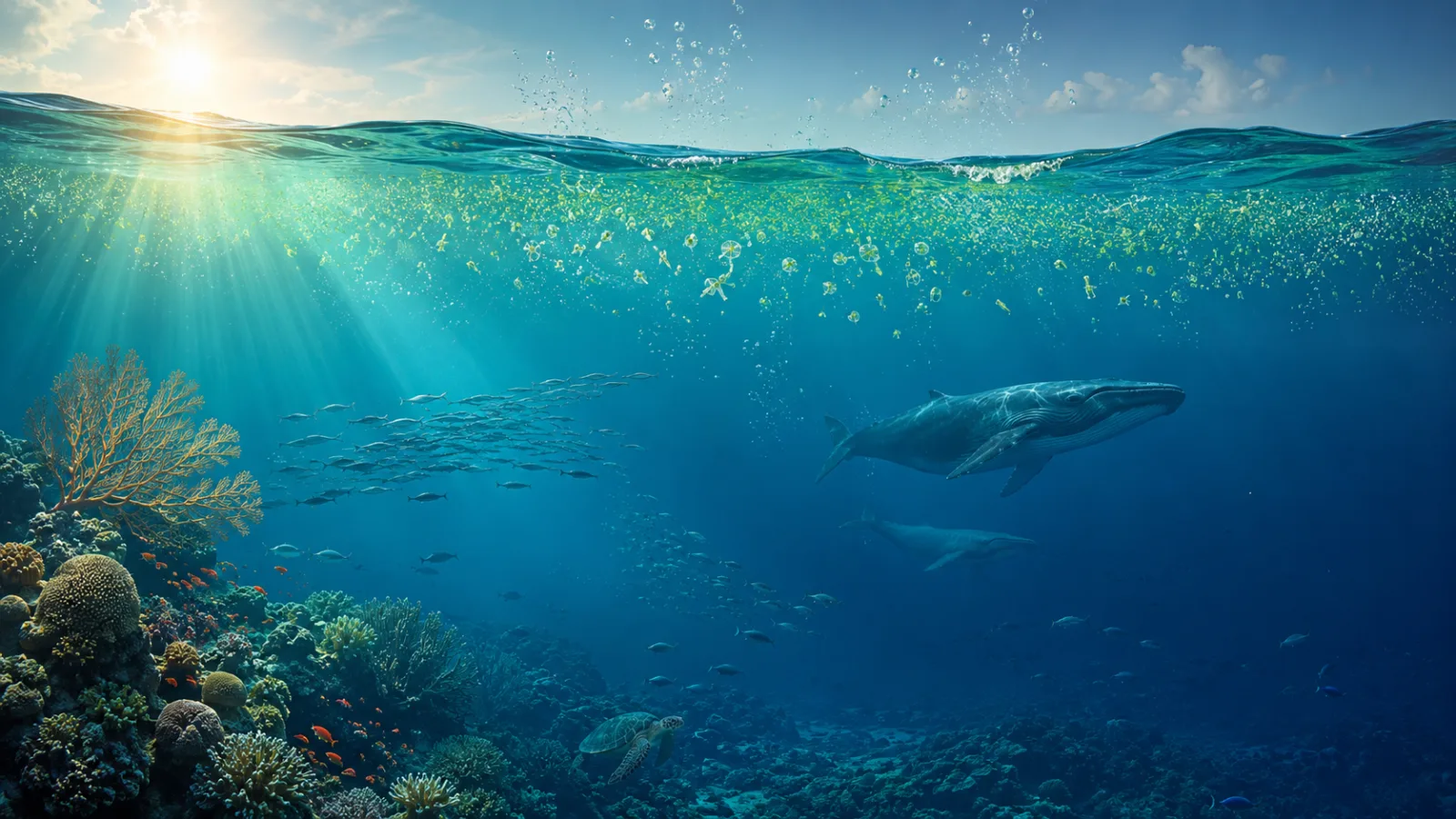
A forest appears three-dimensional, but most of its life remains relatively close to the ground. The ocean extends downward for an average depth of approximately 3.7 kilometres, with life occurring from sunlit coastal waters to some of the deepest trenches.
This immense volume makes the ocean the largest habitable space on our planet.
It contains environments as different from one another as coral reefs, polar seas, open water, muddy continental slopes, underwater volcanoes and deep trenches. Every environment has its own combination of temperature, pressure, light, oxygen and nutrients.
Scientists continue to identify new marine species, particularly among microorganisms and deep-sea animals. However, claims that a precise percentage of “all life on Earth” lives in the ocean should be treated carefully. We have not identified every species on land or in the sea, so an exact global percentage cannot yet be calculated confidently.
It is safer—and still astonishing—to say that the ocean forms the largest continuous living space on Earth. NOAA describes its scale and average depth.
4. About half of Earth’s oxygen production comes from the ocean
When people imagine the source of oxygen, they often picture forests. Forests are extremely important, but much of Earth’s oxygen production also begins with organisms too small to see individually.
Phytoplankton, algae and photosynthetic bacteria near the ocean’s surface use sunlight and carbon dioxide to produce energy. Oxygen is released during this process.
Scientists estimate that the ocean is responsible for roughly half of the oxygen produced on Earth.
However, the popular phrase “every second breath comes from the ocean” is an oversimplification. Marine animals, microorganisms and decomposition processes also consume much of the oxygen produced in the ocean. The atmosphere contains oxygen accumulated through biological activity over hundreds of millions of years.
The correct message is still remarkable: tiny marine organisms play an enormous role in maintaining Earth’s oxygen cycle and supporting ocean food webs.
Read NOAA’s explanation of ocean oxygen production and consumption.
5. The ocean has absorbed about 90% of excess planetary heat
The ocean is not only a habitat. It is also an enormous heat reservoir.
Water can store far more heat than air. As greenhouse gases have caused Earth to retain additional energy, the ocean has absorbed approximately 90% of the resulting excess heat.
This has slowed how quickly the atmosphere warms, but the stored heat has serious consequences. Warmer ocean water contributes to:
- Marine heat waves
- Coral bleaching
- Changes in marine habitats
- Stronger thermal expansion of seawater
- Rising sea levels
- Disruption of currents and food webs
Ocean heat is therefore one of the most important measurements used to understand long-term climate change. A single unusually hot day tells us little about the climate, but decades of rising ocean heat content reveal a clear planetary trend.
NASA reports that the ocean has absorbed about 90% of excess heat from planetary warming.
6. Earth’s longest mountain chain is underwater
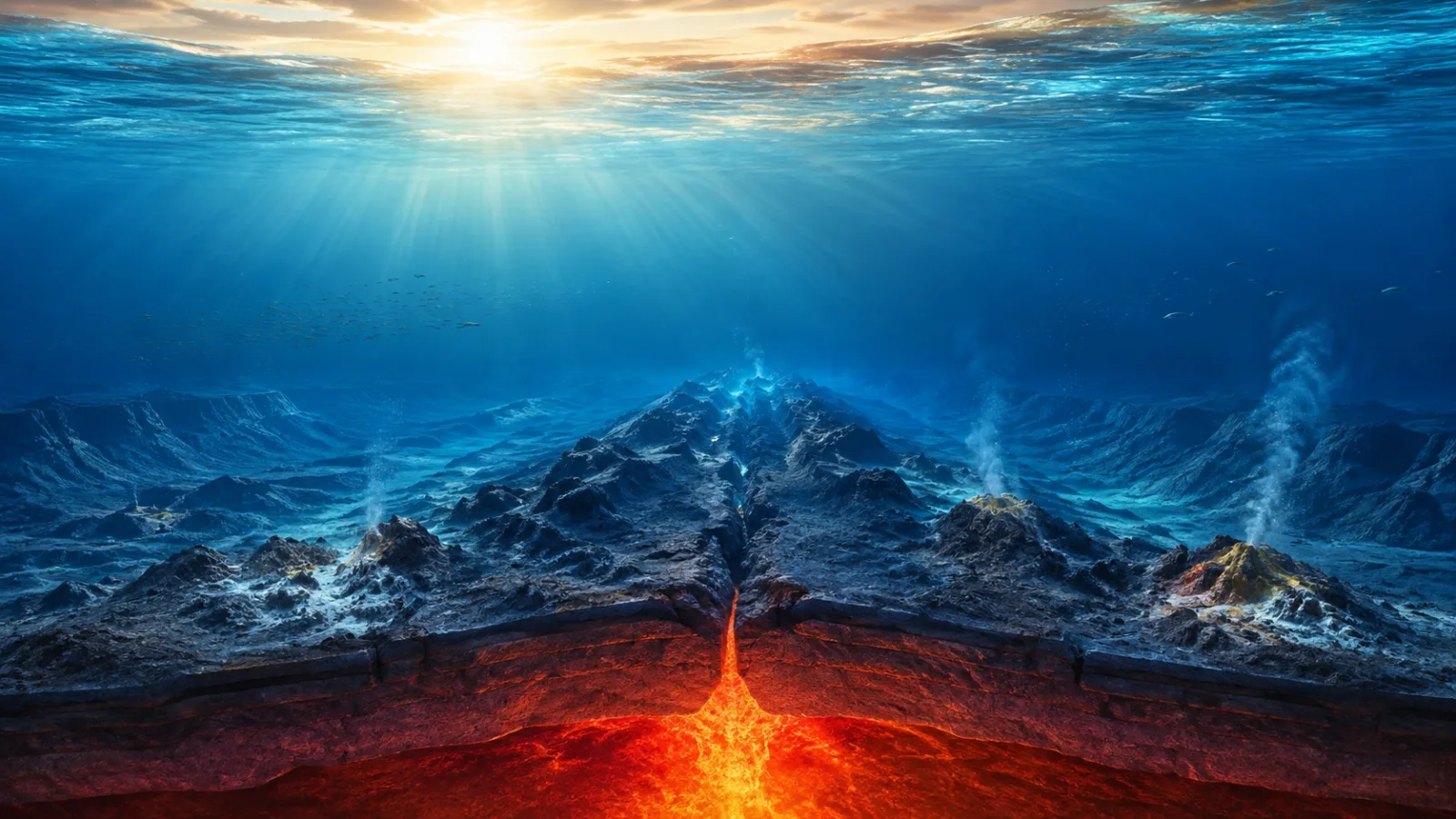
The longest mountain system on Earth is not the Andes, the Himalayas or the Rocky Mountains.
It is the global mid-ocean ridge, an interconnected chain of underwater mountains stretching for nearly 65,000 kilometres. More than 90% of this system lies beneath the ocean.
The ridge forms along boundaries where tectonic plates move apart. Hot material rises from within Earth, cools and creates new oceanic crust. In this way, parts of the seafloor are continuously being renewed.
Some portions rise above sea level. Iceland, for example, sits on the Mid-Atlantic Ridge and provides a rare opportunity to observe part of this immense geological system on land.
Along the submerged ridge, hydrothermal vents release heated, mineral-rich water. These environments can support unusual communities whose food webs begin with chemical energy rather than sunlight.
See NOAA’s guide to the global mid-ocean ridge.
7. Challenger Deep is nearly 11 kilometres below sea level
The deepest known part of the ocean is Challenger Deep, located within the Mariana Trench in the western Pacific.
Modern measurements place its deepest known point at approximately 10,935 metres, although estimates can differ slightly because measuring extreme depth requires corrections for water conditions, gravity, atmospheric pressure and the movement of the sea surface.
To understand its scale, Mount Everest could be placed inside Challenger Deep and its summit would still remain more than two kilometres below sea level.
Pressure increases by approximately one atmosphere for every ten metres of ocean depth. Near the bottom of Challenger Deep, the pressure is therefore more than 1,000 times greater than atmospheric pressure at the surface.
Humans and scientific instruments can reach this environment only inside specially designed vehicles or pressure-resistant landers. Even a small weakness in ordinary equipment would cause it to collapse.
NOAA lists the depth at approximately 10,935 metres and explains how ocean pressure increases with depth.
8. Most of the ocean exists in permanent darkness
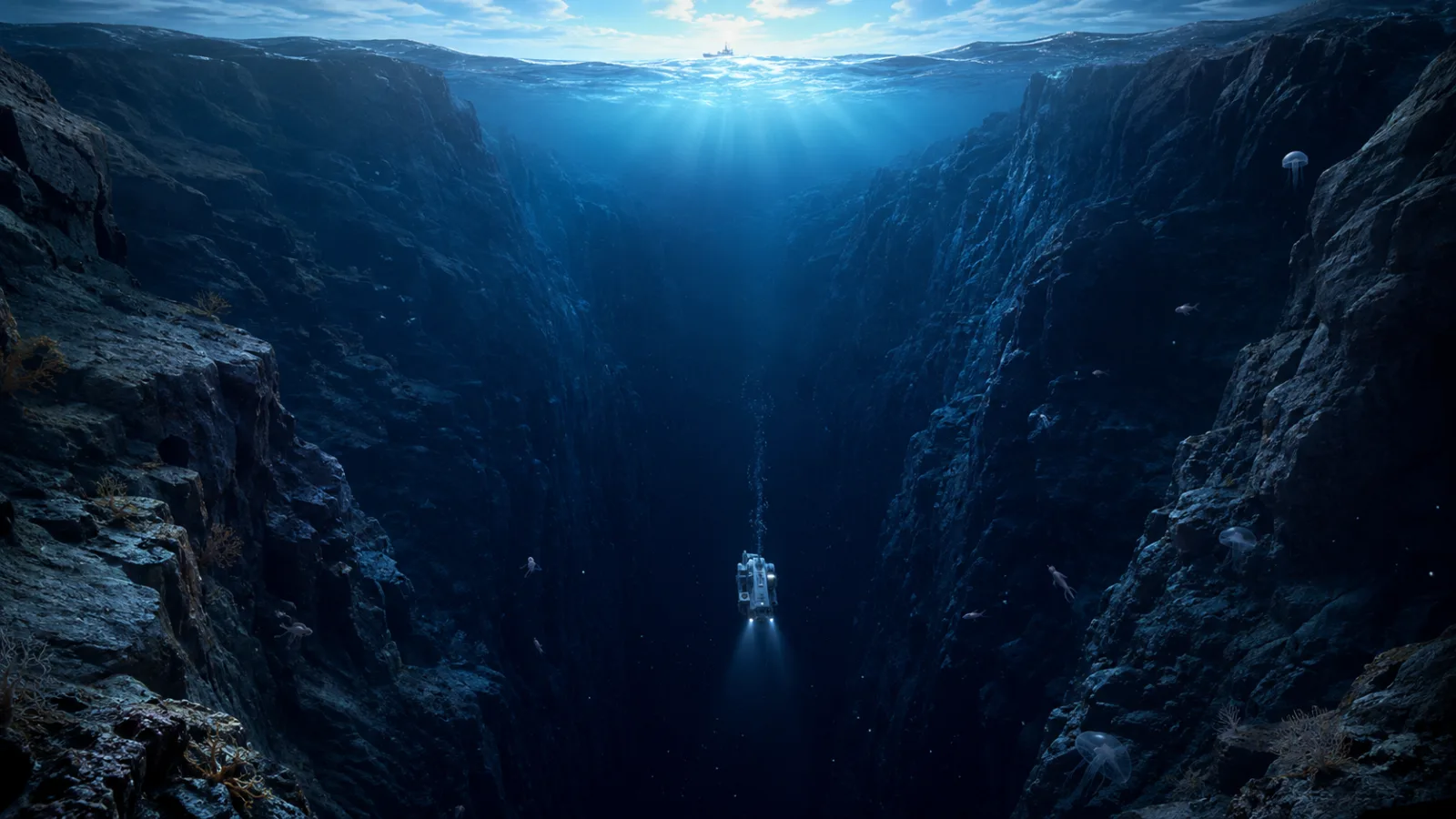
Sunlight becomes weaker as it passes through seawater. Its depth depends on water clarity, particles and location, but useful sunlight rarely penetrates beyond approximately 200 metres.
This upper region is called the sunlight or euphotic zone. It is where phytoplankton can perform photosynthesis and where most familiar ocean food webs begin.
Below it lies the deep sea—a cold, high-pressure environment where sunlight cannot support photosynthesis.
Animals living there may survive by:
- Hunting other animals
- Eating particles of “marine snow” falling from above
- Scavenging dead organisms
- Migrating upward to feed at night
- Depending on microorganisms that use chemical energy
Around some hydrothermal vents and cold seeps, microorganisms obtain energy from chemicals such as hydrogen sulfide or methane. This process, called chemosynthesis, supports communities that do not depend directly on sunlight.
NOAA explains that sunlight rarely reaches beyond 200 metres.
9. Much of the deep ocean is filled with living light
Although sunlight disappears in the deep sea, the darkness is not always completely dark.
Many marine organisms create their own light through chemical reactions. This ability is called bioluminescence.
Animals may use light to:
- Attract prey
- Startle or confuse predators
- Communicate with potential mates
- Illuminate nearby animals
- Camouflage their silhouette against faint light from above
- Release glowing material as a distraction
In a study based on hundreds of thousands of observations in waters off California, researchers found that approximately 76% of the observed water-column organisms were capable of bioluminescence. That percentage should not automatically be applied to every ocean environment, but it demonstrates that biological light is far from rare.
For many animals in the deep ocean, producing light is as normal and useful as producing sound or colour is for animals near the surface.
Read the Scientific Reports study on the distribution of ocean bioluminescence.
10. Mapping the ocean is not the same as seeing it
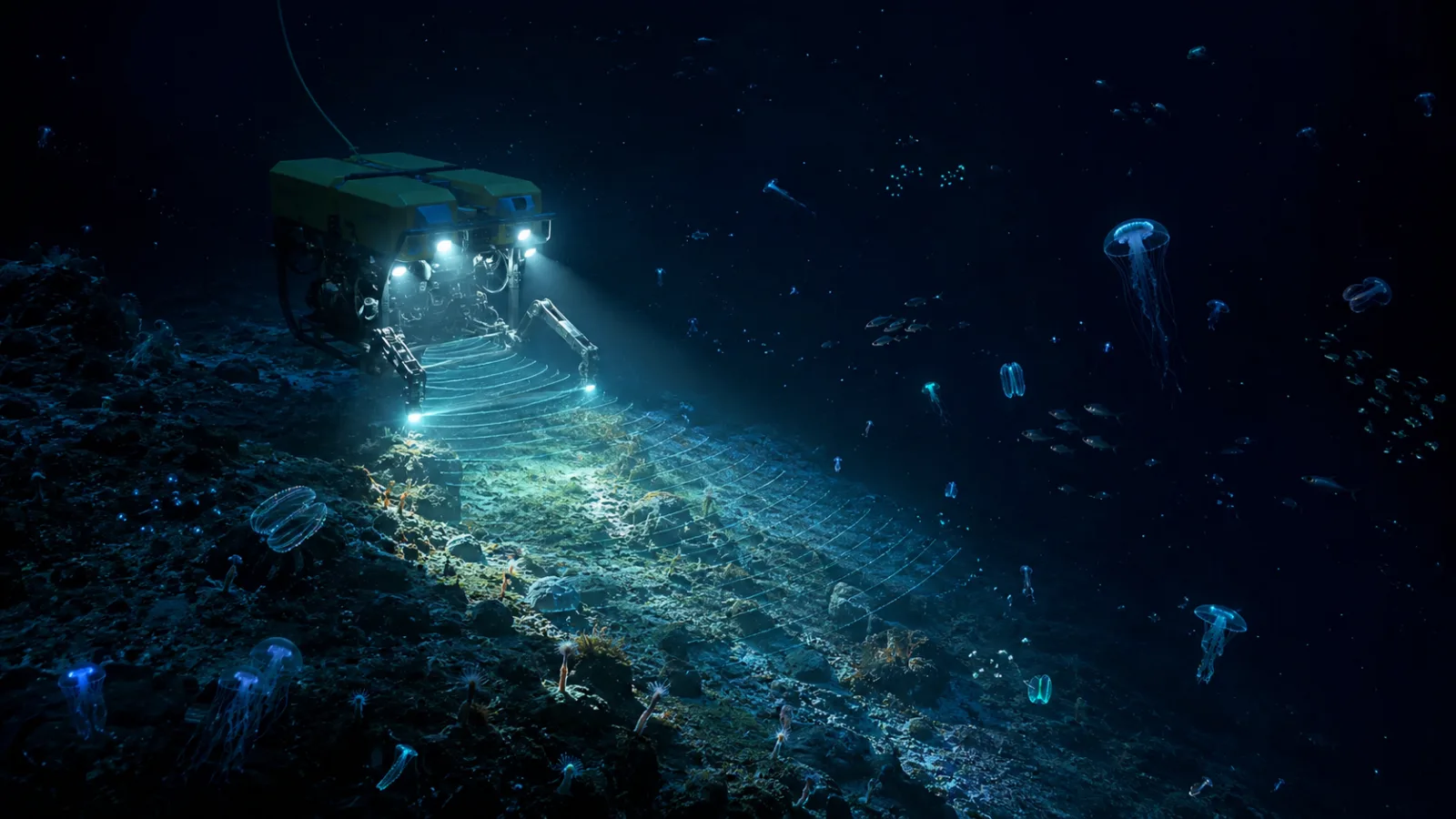
You may have heard that “only 5% of the ocean has been explored.” That statement is memorable, but it is not scientifically precise because mapping, sampling and visually observing are different activities.
Satellites have given scientists a broad global picture of the seafloor. Ships equipped with multibeam sonar can create much more detailed maps, but they must travel over the area being measured.
As of April 2026, the Seabed 2030 project reported that approximately 28.7% of the global ocean floor had been mapped to modern standards. That is a significant improvement, but more than two-thirds still lacks equivalent modern mapping.
Direct visual observation is much rarer.
A 2025 study estimated that cameras and deep-sea vehicles had visually observed only about 0.0006% to 0.001% of the deep seafloor since 1958. The observations were also concentrated around a relatively small number of countries and research programmes, meaning that our visual knowledge is geographically uneven.
So the ocean is not completely unknown—but enormous areas have never been mapped in modern detail, sampled or seen directly.
See the Seabed 2030 mapping update for April 2026 and the Science Advances study estimating visual coverage of the deep seafloor.
A planet shaped by the ocean
The ocean may look like a boundary between continents, but it is really a system that connects the entire planet.
It distributes heat, produces oxygen, carries nutrients, creates new crust and provides living space from the surface to trenches almost eleven kilometres deep. Yet even with satellites, research ships, robotic vehicles and crewed submersibles, much of it remains known only in broad outline.
The most amazing ocean fact may therefore be the simplest one: the largest environment on our own planet is still revealing how much we have left to learn.
Sources and further reading
- NOAA: How many oceans are there?
- USGS: How much water is there on Earth?
- NOAA: How much oxygen comes from the ocean?
- NASA: Ocean warming
- NOAA: The global mid-ocean ridge
- NOAA: Seafloor mapping and Challenger Deep
- NOAA: Light and life in the deep ocean
- Martini and Haddock: Quantification of ocean bioluminescence
- Seabed 2030: 2026 global mapping progress
- Bell et al.: Visual coverage of the deep seafloor